Why Sporte Stands Out in Modern Display Font Design
Display fonts play a crucial role in visual communication, especially when it comes to capturing attention on posters, flyers, headlines, and billboards. Among the many options available today, Sporte has emerged as a popular choice for designers who want a bold yet balanced typographic solution. This article explores what makes Sporte unique, how it fits into the broader landscape of display typefaces, and when it might be the best option for your next project.
The Unique Geometry of Sporte
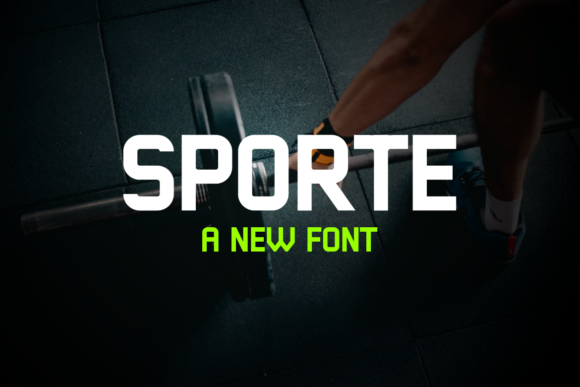
Sporte is a geometric display font that combines sharp angles with clean curves to create a striking visual identity. Its design is rooted in modern aesthetics but maintains enough character to feel dynamic and expressive. Unlike more traditional serif or script fonts, Sporte doesn’t rely on intricate details; instead, it uses its structure and contrast to make an impact.
This font features a consistent stroke width and well-defined shapes, which give it a sense of precision and order. The letters are designed to stand out clearly at large sizes, making them ideal for headlines and signage where readability from a distance is essential. These characteristics help Sporte maintain legibility while still delivering a strong visual punch.
Geometric Fonts vs. Organic and Script Styles
When selecting a display font, you’re often choosing between geometric, organic, and script styles. Each category serves different purposes depending on the message and context you're aiming to convey.
- Geometric fonts, like Sporte, are defined by their use of circles, triangles, and straight lines. They tend to look more structured and contemporary.
- Organic fonts have irregular, hand-drawn shapes and are often used to evoke creativity or natural themes.
- Script fonts mimic handwriting and are great for adding elegance or personality but may sacrifice readability in larger formats.
Sporte’s geometric nature allows it to blend seamlessly into both digital and print designs without overwhelming the viewer. It strikes a balance between formality and energy, making it versatile for various applications.
Use Cases Where Sporte Shines
Sporte excels in situations where you need a strong focal point without overcomplicating the design. Here are some common scenarios where this font proves particularly effective:
- Posters and Event Flyers: With its bold letterforms and clear structure, Sporte works well as a headline font that draws the eye immediately. Whether promoting a music festival, sports event, or product launch, it can anchor your design with a sense of urgency and style.
- Billboards and Outdoor Advertising: Because of its high contrast and open spacing, Sporte is readable from a distance, which is essential for billboard typography. It helps ensure your message is seen and understood quickly by passersby.
- Brand Logos and Identity Kits: For brands looking to establish a modern, athletic, or tech-savvy image, Sporte offers a sleek and memorable aesthetic. Its geometry supports a professional look while retaining a dynamic edge.
- Digital Media and Web Headers: When used in web design or social media content, Sporte adds a layer of sophistication to headers and banners. It pairs well with minimalist layouts and vibrant color schemes.
In all these contexts, Sporte provides a clean, impactful presence that aligns with current design trends favoring clarity and boldness.
Strengths of Using Sporte
Sporte brings several advantages to the table, particularly for projects requiring strong visual hierarchy:
- Modern Aesthetic: Its geometric construction gives it a fresh and contemporary look that appeals to audiences seeking innovation and style.
- High Contrast: The distinct weight differences between strokes enhance readability, especially in large-scale applications.
- Versatility: Sporte adapts well to both uppercase and lowercase usage, and it can be paired with a wide range of supporting fonts without clashing.
- Unicode Support: The font includes a broad set of characters, symbols, and ligatures, allowing for international and stylized text use.
These strengths position Sporte as a reliable asset in any designer’s toolkit, especially for those working in branding, advertising, or editorial design.
Comparative Considerations: When Sporte May Not Be Ideal
While Sporte is a powerful tool for many design needs, it's not always the right fit. Understanding when to avoid this font—and when to consider alternatives—is key to making informed design choices.
One limitation of Sporte is its suitability for long paragraphs of body text. As a display font, it’s optimized for short bursts of information rather than extended reading. If your project involves detailed copy, you’ll likely want to pair it with a more legible sans-serif or serif font.
Additionally, the geometric nature of Sporte may not suit every theme. In contexts that require a warm, vintage, or highly artistic tone, a more ornate or fluid font could be better suited. For example, a luxury brand might prefer a serif font to convey tradition and elegance, while a children’s book illustrator might choose a playful, rounded font instead of the angular Sporte.
Another factor to consider is cultural or contextual appropriateness. While Sporte is neutral and adaptable, some industries or regions may associate certain fonts with specific meanings. A designer should always evaluate whether the font aligns with the intended audience and message.
Alternatives to Sporte
If Sporte isn't quite the match for your project, there are other display fonts worth considering. For instance:
- Bevan: Another geometric sans-serif that shares similarities with Sporte but has a slightly softer edge, making it suitable for more casual applications.
- Bebas Neue: A popular bold sans-serif that emphasizes simplicity and maximum impact, though it lacks the refined geometry of Sporte.
- Montserrat: A modern sans-serif with a more uniform stroke width and subtle variation in weight, offering a cleaner alternative for minimalist designs.
Each of these fonts has its own strengths and weaknesses. Whereas Montserrat is excellent for body text at smaller sizes, Sporte is engineered for bold, large-format use. Bevan and Bebas Neue offer similar geometric appeal but differ in subtlety and versatility.
Design Best Practices When Using Sporte
To get the most out of Sporte, it's important to apply best practices in typography and layout. Here are a few tips to help you integrate it effectively into your designs:
- Pair with Complementary Fonts: Use a contrasting font—such as a soft sans-serif or a classic serif—for body text. This creates a visual hierarchy that guides the reader’s eye naturally toward the headline.
- Limit Character Usage: Since display fonts are meant to highlight key phrases, avoid using Sporte for entire blocks of text. Reserve it for titles, logos, or call-to-action statements.
- Consider Color and Spacing: Sporte’s sharp edges work especially well with high-contrast color combinations. Ensure adequate white space around the text to prevent overcrowding and maintain visual clarity.
- Test at Different Sizes: Always check how Sporte appears at the intended size, especially for outdoor or digital signage. The font’s performance at scale is one of its main selling points, but it’s important to confirm that it looks as good in practice as it does in theory.
By following these guidelines, you can leverage Sporte’s strengths while avoiding potential missteps that could detract from your overall design quality.
Real-World Examples of Sporte in Action
To illustrate how Sporte functions in practical design settings, let’s look at a few examples:
- A fitness apparel company uses Sporte for their billboard ads, pairing it with a simple black background and bright accent colors to emphasize speed and energy.
- A tech startup incorporates Sporte into their website header to showcase a forward-thinking, innovative brand image. They complement it with a lighter sans-serif for subheadings and body copy.
- An event planner selects Sporte for the title of a concert poster, ensuring it stands out against a collage of images and photographs while maintaining legibility.
These cases show how Sporte can serve as a central element in a variety of visual narratives. However, they also highlight the importance of thoughtful implementation to ensure the font enhances rather than distracts from the message.
Evaluating Sporte for Your Project
Deciding whether Sporte is the right choice depends on several factors, including the purpose of the design, the target audience, and the overall visual language you're building. Here are some questions to ask before finalizing your font selection:
- Do I need a font that conveys strength and modernity?
- Will the text be viewed primarily at a distance or in small sizes?
- Is the design style aligned with minimalism, sportswear, or technology themes?
- Am I using this font for a short headline or a longer paragraph?
Answering these questions will help you determine if Sporte is a good fit or if another font might better support your goals. Remember, the best font is the one that communicates your message most effectively within the design context.
Final Thoughts on Choosing Sporte
Sporte is a compelling option for anyone in need of a modern, geometric display font. Its design philosophy prioritizes clarity and impact, making it especially valuable for large-format and high-visibility projects. However, like all tools, it has its place—and knowing when and how to use it is just as important as recognizing its benefits.
By understanding the tradeoffs and exploring realistic use cases, you can decide whether Sporte is the optimal choice for your creative vision. It’s not about finding the "best" font, but the most appropriate one for your specific needs.