Farmerette: A Versatile Serif Font for Elegant and Flourished Typography
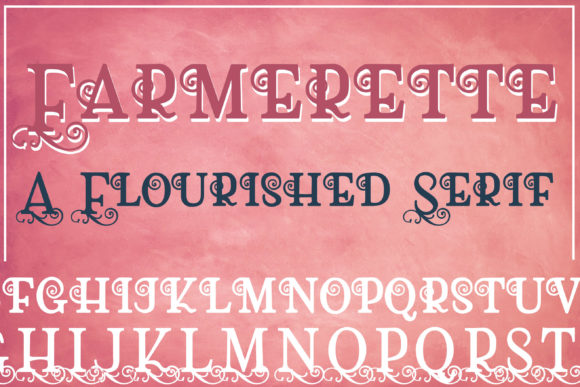
Farmerette is a distinctive serif typeface that has gained popularity among designers, typographers, and branding professionals due to its ornate and decorative qualities. Originally inspired by vintage typography found in old-timey labels and packaging, Farmerette brings a nostalgic charm with its flourishes and elegant uppercase letters. It is particularly well-suited for projects requiring visual flair, such as wedding invitations, logos, monograms, and editorial design.
What Makes Farmerette Unique?
The standout feature of Farmerette is its combination of classic serifs with intricate, hand-drawn flourishes. These details make it ideal for creating eye-catching headlines or adding a touch of sophistication to any design. The font's uppercase characters are especially notable, featuring more extreme flourishes than the lowercase set. This contrast allows for creative flexibility while maintaining legibility where needed.
Farmerette also includes a variant known as Farmerette Frame, which adds an ornamental border or frame around each character. This framed version enhances the decorative nature of the font and is often used for titles, headings, or signature-style text elements. Together, these two versions offer a cohesive yet dynamic toolkit for typographic expression.
Key Characteristics of Farmerette
- Elegant Serifs: Farmerette’s serif design is reminiscent of traditional calligraphy, giving it a timeless appeal.
- Flourished Uppercase: The uppercase letters are highly embellished, making them perfect for monograms or short phrases.
- Versatile Weight Options: Available in multiple weights, allowing adaptation to various design contexts from delicate scripts to bold statements.
- Handcrafted Feel: Designed with a subtle irregularity that mimics human handwriting, adding warmth and authenticity.
- Farmerette Frame: Offers a framed variation that can be used for special emphasis or decorative purposes.
Farmerette vs. Other Decorative Serif Fonts
When choosing between Farmerette and other decorative serif fonts, several factors come into play. Fonts like Great Vibes or Allura also feature flourishes and ornate designs, but they differ in their weight distribution and overall style. Farmerette offers a more structured base with its serif design, while others may lean more heavily into script-like characteristics.
For those seeking a balance between readability and artistry, Farmerette is a strong contender. Its structure ensures it remains legible even when used in longer passages, though it shines brightest in short-form text. In comparison, some other flourished fonts might struggle with extended use due to reduced clarity.
Use Cases and Best-Fit Situations
Farmerette excels in scenarios where visual impact is essential. Here are a few examples of how it can be effectively used:
- Wedding Invitations: The flourishes and elegant feel of Farmerette add a romantic and sophisticated touch.
- Logo Design: Particularly useful for brands aiming for a vintage or artisanal aesthetic, such as craft breweries, bakeries, or boutique shops.
- Monograms: The uppercase version is excellent for personalized monogrammed designs on stationery, apparel, or gift items.
- Editorial Design: Can be used for chapter titles, headers, or pull quotes in magazines, cookbooks, or lifestyle publications.
- Event Branding: Ideal for event posters, signage, and promotional materials that require a decorative yet professional look.
Strengths and Tradeoffs of Using Farmerette
One of Farmerette’s greatest strengths lies in its ability to evoke a sense of tradition and craftsmanship. The font feels hand-made, which appeals to audiences looking for authentic, artisanal aesthetics. Additionally, the inclusion of both standard and framed versions provides designers with more options to tailor the font to specific needs without compromising style.
However, there are tradeoffs to consider. While the uppercase letters are beautifully flourished, using them in long blocks of text can reduce readability. Similarly, the ornate nature of Farmerette may not suit every brand identity—especially those leaning toward modern minimalism or clean sans-serif aesthetics. In such cases, pairing Farmerette with a simpler secondary font can help maintain balance.
Limitations and Considerations
Despite its versatility, Farmerette isn't always the best fit. For body text, especially in digital formats, it may appear too heavy or distracting. The font’s detailed strokes and flourishes can sometimes lead to issues with screen rendering at smaller sizes. Therefore, it’s recommended to reserve Farmerette for display purposes rather than large amounts of content.
Another consideration is licensing. Depending on your project scope, you may need to verify whether the font is suitable for commercial use. Always check the font's terms of use before incorporating it into client work or public-facing materials.
How to Choose Between Farmerette Variants
Deciding whether to use the standard Farmerette or the Farmerette Frame variant depends largely on the context and purpose of your design. Here’s a breakdown of when each might be appropriate:
- Standard Farmerette: Use this version when you want to highlight text with elegance but don’t need additional framing. It works well for headlines, titles, and short captions.
- Farmerette Frame: Opt for this when you need a bolder statement or a more structured visual element. The frames add depth and dimension, making it ideal for logo accents, badge-style text, or framed illustrations.
In practice, many designers find value in using both versions together. For instance, a wedding invitation might feature Farmerette for the main title and Farmerette Frame for the couple’s names or the event details. This layered approach enhances visual interest without overwhelming the design.
Farmerette in Branding and Design Projects
Branding projects often benefit from the unique character of Farmerette. It can be used to create memorable logos, especially for businesses targeting niche markets such as organic farms, artisanal food producers, or heritage-themed ventures. The font’s ornate style aligns well with themes of quality, tradition, and craftsmanship.
Designers should also consider how Farmerette interacts with color and layout. Because of its rich detail, it pairs best with solid colors or high-contrast backgrounds. Avoid using it over complex textures or gradients unless the effect is intentional and supports legibility.
Realistic Examples of Farmerette Usage
Here are some practical applications of Farmerette in real-world design settings:
- A bakery’s logo uses Farmerette in gold ink on a dark background, emphasizing the brand’s artisanal roots.
- A fashion designer incorporates Farmerette Frame into a collection name for a vintage-inspired clothing line.
- A book cover features Farmerette for the title, complemented by a minimalist sans-serif font for the author name and subtitle.
- A boutique hotel website uses Farmerette in header sections to reflect its cozy, home-away-from-home vibe.
Alternatives to Consider
While Farmerette is an excellent choice for many design needs, there are other fonts that may better suit different styles or purposes. For example:
- Brush Script: Offers a more fluid, handwritten look that may appeal to those wanting less structure.
- Playfair Display: A more refined serif option that lacks flourishes but offers a similar level of elegance and versatility.
- Lobster: Provides a playful, rounded alternative with a similar decorative edge, though it leans more toward a slab serif style.
- Kalam: A softer, more casual script font that could be used alongside Farmerette for contrasting text elements.
These alternatives demonstrate the range of possibilities available depending on the desired tone and functionality. Designer preferences and project requirements will ultimately determine the best match.
Factors to Guide Your Decision
When evaluating whether Farmerette is the right font for your project, consider the following decision factors:
- Tone and Audience: Does your design aim to convey tradition, luxury, or nostalgia? If so, Farmerette may be a good fit.
- Legibility Needs: Will the text be read closely or from a distance? Farmerette is more effective in display settings than in body copy.
- Project Scope: Is the font needed for a single headline or across multiple design elements? Evaluate if its detailed style will support or hinder usability.
- Visual Harmony: How does Farmerette interact with other fonts or design elements? Pairing it with a clean, neutral font can enhance its impact.
- Technical Requirements: Ensure the font is compatible with your design software and renders clearly on all platforms.
Final Thoughts on Typographic Choice
Choosing the right font involves understanding both form and function. Farmerette stands out for its ornate beauty and adaptability, making it a valuable addition to any designer’s toolkit. However, it’s important to weigh its decorative nature against the practical demands of your project. By considering factors like legibility, audience expectations, and visual harmony, you can determine whether Farmerette—or another font—is the best choice for your needs.
Ultimately, the best way to decide is to test it in context. Try applying Farmerette to your mockups and see how it performs under different conditions. Pay attention to how it looks across devices and in print. With thoughtful application, Farmerette can elevate your design with its classic, flourished appeal.